---
title: "AI-POWERED SOCIAL RESEARCH: COMPETITIVE INTELLIGENCE"
description: Explore AI-powered social research for competitive intelligence, turning digital insights into actionable business intelligence and smarter decisions.
image: https://www.findernest.com/hubfs/ChatGPT%20Image%20Aug%2014%2c%202026%2c%2008_32_27%20AM.png
---
[Skip to main content](https://www.findernest.com/en/blog/ai-powered-social-research-turning-digital-signals-into-a-competitive-intelligence-engine#main-content)
[ ](https://www.findernest.com)
- [Show submenu for Solutions Solutions](https://www.findernest.com/services)
- [Show submenu for Digital Transformation Digital Transformation](https://www.findernest.com/digital-transformation-solutions)
- [AI & Intelligent Automation](https://www.findernest.com/ai)
- [Cloud Transformation](https://www.findernest.com/cloud)
- [Data & Analytics](https://www.findernest.com/data)
- [Enterprise Digital Transformation](https://www.findernest.com/software-engineering)
- [Customer Experience Transformation](https://www.findernest.com/ui-ux)
- [Cybersecurity & Identity Solutions](https://www.findernest.com/cybersecurity)
- [Show submenu for Product/Platform Engineering Product/Platform Engineering](https://www.findernest.com/product-development-platform-engineering-services)
- [Platform Engineering](https://www.findernest.com/software-engineering)
- [Product Development](https://www.findernest.com/software-engineering)
- [Cloud-Native Applications](https://www.findernest.com/cloud)
- [DevOps & DevSecOps](https://www.findernest.com/devops)
- [ERP & Enterprise Applications](https://www.findernest.com/product-development-platform-engineering-services)
- [Observability & Reliability](https://www.findernest.com/observability-reliability-services)
- [Show submenu for Managed IT Solutions Managed IT Solutions](https://www.findernest.com/managed-it-services-support)
- [IT Support](https://www.findernest.com/managed-it-services-support)
- [Cybersecurity](https://www.findernest.com/cybersecurity)
- [Cloud Infrastructure](https://www.findernest.com/cloud)
- [Disaster Recovery](https://www.findernest.com/devops)
- [Network & Server Management](https://www.findernest.com/managed-it-services-support)
- [Show submenu for Talent Solutions Talent Solutions](https://www.findernest.com/talent-solutions)
- [Contingent Workforce](https://www.findernest.com/talent-solutions)
- [Dedicated Team](https://www.findernest.com/talent-solutions)
- [Staffing Services](https://www.findernest.com/talent-solutions)
- [Recruitment Process Outsourcing](https://www.findernest.com/talent-solutions)
- [Show submenu for Platforms Platforms](https://www.findernest.com/platforms)
- [AWS](https://www.findernest.com/aws)
- [SAP](https://www.findernest.com/sap)
- [Oracle](https://www.findernest.com/oracle)
- [Microsoft](https://www.findernest.com/microsoft)
- Google Cloud
- [Zoho](https://www.findernest.com/zoho)
- [Databricks](https://www.findernest.com/databricks)
- [Servicenow](https://www.findernest.com/servicenow)
- [Outsystems](https://www.findernest.com/outsystems)
- [Hubspot](https://www.findernest.com/hubspot)
- [Salesforce](https://www.findernest.com/salesforce)
- [Show submenu for Industries Industries](https://www.findernest.com/industry)
- [Show submenu for Technology & Internet Technology & Internet](https://www.findernest.com/industry)
- [Ecommerce](https://www.findernest.com/industry)
- [HealthTech](https://www.findernest.com/industry)
- [FinTech](https://www.findernest.com/industry)
- [Edutech](https://www.findernest.com/industry)
- [High Tech](https://www.findernest.com/industry)
- [Show submenu for Healthcare & Life Sciences Healthcare & Life Sciences](https://www.findernest.com/industry)
- [Healthcare](https://www.findernest.com/industry)
- [Life Sciences](https://www.findernest.com/industry)
- [Pharmaceuticals](https://www.findernest.com/industry)
- [Medical Devices](https://www.findernest.com/industry)
- [Biotechnology](https://www.findernest.com/industry)
- [Show submenu for BFSI BFSI](https://www.findernest.com/industry)
- [Banking](https://www.findernest.com/industry)
- [Insurance](https://www.findernest.com/industry)
- [Financial Services](https://www.findernest.com/industry)
- [Show submenu for TME TME](https://www.findernest.com/industry)
- [Telecom](https://www.findernest.com/industry)
- [Gaming](https://www.findernest.com/industry)
- [Entertainment](https://www.findernest.com/industry)
- [OTT (Over-The-Top)](https://www.findernest.com/industry)
- [Media](https://www.findernest.com/industry)
- [Show submenu for Engineering & Construction Engineering & Construction](https://www.findernest.com/industry)
- [Engineering](https://www.findernest.com/industry)
- [Transportation](https://www.findernest.com/industry)
- [Infrastructure](https://www.findernest.com/industry)
- [Commercial/ Residential](https://www.findernest.com/industry)
- [Show submenu for Supply Chain Supply Chain](https://www.findernest.com/industry)
- [Manufacturing](https://www.findernest.com/industry)
- [FMCG](https://www.findernest.com/industry)
- [Automotive](https://www.findernest.com/industry)
- [Show submenu for Energy & Utilities Energy & Utilities](https://www.findernest.com/industry)
- [Oil & Gas](https://www.findernest.com/industry)
- [Environment](https://www.findernest.com/industry)
- [Energy](https://www.findernest.com/industry)
- [Utilities](https://www.findernest.com/industry)
- [Govt & Public Sector](https://www.findernest.com/industry)
- [Careers](https://findernest.zohorecruit.in/jobs/Careers)
- [Show submenu for About Us About Us](https://www.findernest.com/about)
- [Who we Are](https://www.findernest.com/about)
- [How We Work](https://www.findernest.com/how-we-work)
- [Blogs & Insights](https://www.findernest.com/en/blog)
- [Sustainability](https://www.findernest.com/sustainability)
- [Privacy Policy](https://www.findernest.com/privacy)
- [Community Guidelines](https://www.findernest.com/policy)
- [Terms & Conditions](https://www.findernest.com/terms)
Open main navigation
Close main navigation
- Show submenu for Solutions Solutions
- Solutions
- [Solutions](https://www.findernest.com/services)
- Show submenu for Digital Transformation Digital Transformation
- Digital Transformation
- [Digital Transformation](https://www.findernest.com/digital-transformation-solutions)
- [AI & Intelligent Automation](https://www.findernest.com/ai)
- [Cloud Transformation](https://www.findernest.com/cloud)
- [Data & Analytics](https://www.findernest.com/data)
- [Enterprise Digital Transformation](https://www.findernest.com/software-engineering)
- [Customer Experience Transformation](https://www.findernest.com/ui-ux)
- [Cybersecurity & Identity Solutions](https://www.findernest.com/cybersecurity)
- Show submenu for Product/Platform Engineering Product/Platform Engineering
- Product/Platform Engineering
- [Product/Platform Engineering](https://www.findernest.com/product-development-platform-engineering-services)
- [Platform Engineering](https://www.findernest.com/software-engineering)
- [Product Development](https://www.findernest.com/software-engineering)
- [Cloud-Native Applications](https://www.findernest.com/cloud)
- [DevOps & DevSecOps](https://www.findernest.com/devops)
- [ERP & Enterprise Applications](https://www.findernest.com/product-development-platform-engineering-services)
- [Observability & Reliability](https://www.findernest.com/observability-reliability-services)
- Show submenu for Managed IT Solutions Managed IT Solutions
- Managed IT Solutions
- [Managed IT Solutions](https://www.findernest.com/managed-it-services-support)
- [IT Support](https://www.findernest.com/managed-it-services-support)
- [Cybersecurity](https://www.findernest.com/cybersecurity)
- [Cloud Infrastructure](https://www.findernest.com/cloud)
- [Disaster Recovery](https://www.findernest.com/devops)
- [Network & Server Management](https://www.findernest.com/managed-it-services-support)
- Show submenu for Talent Solutions Talent Solutions
- Talent Solutions
- [Talent Solutions](https://www.findernest.com/talent-solutions)
- [Contingent Workforce](https://www.findernest.com/talent-solutions)
- [Dedicated Team](https://www.findernest.com/talent-solutions)
- [Staffing Services](https://www.findernest.com/talent-solutions)
- [Recruitment Process Outsourcing](https://www.findernest.com/talent-solutions)
- Show submenu for Platforms Platforms
- Platforms
- [Platforms](https://www.findernest.com/platforms)
- [AWS](https://www.findernest.com/aws)
- [SAP](https://www.findernest.com/sap)
- [Oracle](https://www.findernest.com/oracle)
- [Microsoft](https://www.findernest.com/microsoft)
- Google Cloud
- [Zoho](https://www.findernest.com/zoho)
- [Databricks](https://www.findernest.com/databricks)
- [Servicenow](https://www.findernest.com/servicenow)
- [Outsystems](https://www.findernest.com/outsystems)
- [Hubspot](https://www.findernest.com/hubspot)
- [Salesforce](https://www.findernest.com/salesforce)
- Show submenu for Industries Industries
- Industries
- [Industries](https://www.findernest.com/industry)
- Show submenu for Technology & Internet Technology & Internet
- Technology & Internet
- [Technology & Internet](https://www.findernest.com/industry)
- [Ecommerce](https://www.findernest.com/industry)
- [HealthTech](https://www.findernest.com/industry)
- [FinTech](https://www.findernest.com/industry)
- [Edutech](https://www.findernest.com/industry)
- [High Tech](https://www.findernest.com/industry)
- Show submenu for Healthcare & Life Sciences Healthcare & Life Sciences
- Healthcare & Life Sciences
- [Healthcare & Life Sciences](https://www.findernest.com/industry)
- [Healthcare](https://www.findernest.com/industry)
- [Life Sciences](https://www.findernest.com/industry)
- [Pharmaceuticals](https://www.findernest.com/industry)
- [Medical Devices](https://www.findernest.com/industry)
- [Biotechnology](https://www.findernest.com/industry)
- Show submenu for BFSI BFSI
- BFSI
- [BFSI](https://www.findernest.com/industry)
- [Banking](https://www.findernest.com/industry)
- [Insurance](https://www.findernest.com/industry)
- [Financial Services](https://www.findernest.com/industry)
- Show submenu for TME TME
- TME
- [TME](https://www.findernest.com/industry)
- [Telecom](https://www.findernest.com/industry)
- [Gaming](https://www.findernest.com/industry)
- [Entertainment](https://www.findernest.com/industry)
- [OTT (Over-The-Top)](https://www.findernest.com/industry)
- [Media](https://www.findernest.com/industry)
- Show submenu for Engineering & Construction Engineering & Construction
- Engineering & Construction
- [Engineering & Construction](https://www.findernest.com/industry)
- [Engineering](https://www.findernest.com/industry)
- [Transportation](https://www.findernest.com/industry)
- [Infrastructure](https://www.findernest.com/industry)
- [Commercial/ Residential](https://www.findernest.com/industry)
- Show submenu for Supply Chain Supply Chain
- Supply Chain
- [Supply Chain](https://www.findernest.com/industry)
- [Manufacturing](https://www.findernest.com/industry)
- [FMCG](https://www.findernest.com/industry)
- [Automotive](https://www.findernest.com/industry)
- Show submenu for Energy & Utilities Energy & Utilities
- Energy & Utilities
- [Energy & Utilities](https://www.findernest.com/industry)
- [Oil & Gas](https://www.findernest.com/industry)
- [Environment](https://www.findernest.com/industry)
- [Energy](https://www.findernest.com/industry)
- [Utilities](https://www.findernest.com/industry)
- [Govt & Public Sector](https://www.findernest.com/industry)
- [Careers](https://findernest.zohorecruit.in/jobs/Careers)
- Show submenu for About Us About Us
- About Us
- [About Us](https://www.findernest.com/about)
- [Who we Are](https://www.findernest.com/about)
- [How We Work](https://www.findernest.com/how-we-work)
- [Blogs & Insights](https://www.findernest.com/en/blog)
- [Sustainability](https://www.findernest.com/sustainability)
- [Privacy Policy](https://www.findernest.com/privacy)
- [Community Guidelines](https://www.findernest.com/policy)
- [Terms & Conditions](https://www.findernest.com/terms)
- Search
- [Contact](https://www.findernest.com/contact)
[Contact](https://www.findernest.com/contact)
Search
# AI-POWERED SOCIAL RESEARCH: COMPETITIVE INTELLIGENCE

by [Praveen Gundala](https://www.findernest.com/en/blog/author/praveen-gundala)
14 August 2026, 10:30:00 am IST
## How Businesses Can Transform Online Insights Into Better Decisions
Businesses today have access to an unprecedented amount of customer information. Reviews, social platforms, online communities, and digital discussions contain valuable signals about customer expectations, competitor perception, and emerging market trends.
The challenge is not finding information—it is making sense of it quickly enough to support better decisions.
Traditional market research methods such as surveys, interviews, focus groups, and industry reports remain valuable. However, they often provide a snapshot of customer behaviour at a specific point in time. In rapidly changing markets, customer preferences, competitor strategies, and industry conversations can evolve faster than traditional research cycles.
[AI-powered social research](https://www.findernest.com/en/blog/ai-powered-social-research-transforming-conversations-into-growth?utm_) helps address this challenge by continuously analyzing publicly available [digital information using Artificial Intelligence](https://www.ibm.com/think/topics/artificial-intelligence-business?utm_)(AI), Machine Learning (ML), Natural Language Processing (NLP), and Generative AI.
At FindErnest, AI-powered social research goes beyond basic social listening. It focuses on transforming large volumes of digital signals into actionable business intelligence that helps organizations improve marketing strategy, customer experience, product decisions, and long-term planning.
This approach does not replace traditional research. Instead, it strengthens decision-making by providing a continuous view of customer sentiment, competitive activity, and market shifts.
## Why Traditional Market Research Alone Is Not Enough
Traditional research provides structured insights that help organizations understand customers and validate business decisions. Surveys and interviews, for example, allow companies to directly collect feedback and measure specific outcomes.
However, these methods are often conducted periodically, while markets continue to change every day.
Customer expectations evolve, competitors introduce new offerings, and public sentiment shifts across digital channels. By the time research findings are available, businesses may already be responding to changes that have taken place weeks earlier.
AI-powered social research enables organizations to monitor these changes continuously. By analysing digital discussions and customer signals at scale, businesses can gain deeper visibility into customer needs, market trends, competitor positioning, and emerging opportunities.
The result is a more dynamic understanding of the market—one that combines traditional research with real-time intelligence.
### From Social Listening to Strategic Intelligence
Many organizations already use social listening tools to monitor brand mentions and engagement. While these tools provide useful visibility, they often focus primarily on what audiences are saying.
AI-powered social research explores the deeper meaning behind these signals.
It helps organizations understand why certain topics are gaining attention, how customers perceive brands, which competitor experiences are influencing buyers, and where new opportunities may exist.
By identifying patterns across thousands or even millions of digital interactions, AI can uncover insights that would be difficult to detect manually. This moves organizations beyond simple monitoring toward strategic intelligence that supports business decisions.
## FindErnest’s Five Layers of AI Social Research Framework
Turning digital information into meaningful intelligence requires more than collecting data. Organizations need a structured approach to interpret signals, identify patterns, and connect insights with business outcomes.
To address this need, FindErnest has developed its **Five Layers of AI Social Research framework**. This is FindErnest’s own methodology for transforming digital discussions into actionable insights and is not an industry-standard framework.
The framework helps organizations progressively understand customer behaviour, market trends, competitive dynamics, and future opportunities through AI-driven analysis.
### 1. Customer Voice Analysis
The first layer focuses on identifying what customers are expressing across social platforms, review websites, forums, blogs, and other publicly available sources.
AI analyses recurring themes, customer concerns, feature requests, and expectations to uncover authentic feedback at scale. This helps organizations understand customer needs beyond structured research responses and identify areas where products, services, or experiences can improve.
### 2. Sentiment Intelligence
Understanding customer opinions is only part of the picture. Businesses also need to understand the emotions behind those opinions.
[Sentiment intelligence](https://www.ibm.com/think/topics/sentiment-analysis?utm_) uses AI analysis to identify patterns of satisfaction, frustration, excitement, uncertainty, and dissatisfaction across digital discussions.
These insights allow organizations to detect potential issues earlier, understand customer experiences more clearly, and respond more effectively to changing expectations.
### 3. Competitive Intelligence
Digital channels also provide valuable insight into how customers perceive competitors.
Competitive intelligence helps organizations identify competitor strengths, customer preferences, market gaps, and areas where experiences can be improved.
By understanding how audiences compare brands and products, businesses can make more informed strategic decisions and identify opportunities for differentiation.
### 4. Trend Detection
Market shifts often begin with smaller signals before becoming larger industry movements. AI-powered trend detection identifies these early patterns by analysing changes in digital discussions, audience interests, and emerging topics.
This helps organizations recognize evolving customer expectations, new market opportunities, and changing industry dynamics before they become widely established.
By identifying trends earlier, businesses can make more informed decisions around product development, marketing strategy, and future planning.
### 5. Predictive Intelligence
The final layer focuses on using historical patterns and current market signals to support future decision-making.
Predictive intelligence helps organizations identify possible changes in customer behaviour, emerging risks, and potential opportunities. While AI predictions cannot guarantee future outcomes, they provide valuable direction for strategic planning.
Organizations can use these insights to improve product roadmaps, refine marketing strategies, and prepare for changing market conditions.
Together, these five layers create a continuous intelligence cycle. Businesses can understand customer needs, evaluate sentiment, monitor competitors, identify trends, and anticipate future possibilities through a structured AI-driven approach.
FindErnest positions AI-powered social research as a strategic business capability that supports [decision-making](https://www.findernest.com/data?utm_)across marketing, customer experience, product development, and leadership functions.
## Turning Digital Insights Into Business Value
Collecting large volumes of digital information is only the beginning. The real value comes from converting those insights into actions that improve business outcomes.
FindErnest’s AI-powered social research methodology focuses on connecting market intelligence with [measurable business impact.](https://www.ibm.com/think/topics/ai-analytics)According to FindErnest’s published methodology, organizations applying this approach can achieve:
These benchmark figures are published by FindErnest as part of its AI-powered social research methodology and should be understood in that context. They are not presented as universal industry-wide statistics.
Beyond these benchmarks, the broader value of AI-powered social research lies in helping organizations make faster, better-informed decisions. Insights from customer feedback, competitive analysis, and market trends can support stronger campaigns, improved customer experiences, better product decisions, and more responsive business strategies.
### Illustrative Example: Turning Customer Insights Into Competitive Advantage
Consider a mid-sized FinTech company preparing to launch a new digital lending platform.
Initial research shows strong customer interest, but application completion rates remain lower than expected. To understand the challenge, the company uses an AI-powered social research approach to analyse publicly available discussions across financial communities, review platforms, and social channels.
The analysis reveals that customers are not rejecting the product itself. Instead, many users are experiencing uncertainty around documentation requirements, eligibility criteria, and the onboarding process.
At the same time, competitor analysis shows that customers appreciate simpler application journeys and clearer communication from alternative providers.
Using these insights, the company improves its onboarding experience, simplifies messaging, and addresses the concerns already affecting potential customers.
This example is hypothetical and not based on a specific FindErnest engagement. It demonstrates how AI-powered social research can help organizations move from reacting to customer challenges toward proactively improving customer experiences.
## AI-Powered Social Research Beyond Marketing
AI-powered social research is often associated with marketing teams, but its value extends across the organization.
Product teams can use customer insights to prioritize improvements based on real user feedback. Customer experience teams can identify recurring issues and improve service delivery. Sales teams can better understand buyer concerns, while leadership teams can use competitive and market intelligence to support strategic decisions.
[FindErnest](https://www.findernest.com/ai?utm_) also emphasizes connecting AI-powered social research insights with broader business systems, including CRM platforms, ERP solutions, marketing technologies, service management tools, and business intelligence dashboards.
This integration helps organizations combine customer intelligence with operational data, ensuring insights contribute to wider business planning rather than remaining isolated within a single function.
Independent research also highlights the growing impact of AI on customer behaviour and business decision-making. Bain & Company has discussed how AI is changing the way consumers discover information and interact with brands, reinforcing the importance of faster and more adaptive approaches to understanding customer needs.
## Conclusion: Building a Smarter Approach to Market Intelligence
The challenge for modern businesses is no longer access to information. It is the ability to transform large volumes of digital signals into insights that support meaningful decisions.
AI-powered social research helps organizations bridge this gap by turning customer feedback, online discussions, and market signals into actionable intelligence.
Through FindErnest’s Five Layers of AI Social Research framework, businesses can move beyond basic social listening and develop deeper visibility into customer expectations, competitor positioning, emerging trends, and future opportunities.
Traditional research methods will continue to play an important role in understanding markets. However, organizations operating in fast-changing environments also need continuous intelligence that reflects current customer behaviour and market movement.
Combining structured research with AI-driven analysis enables businesses to make decisions with greater confidence and respond more effectively to change.
## Transform Customer Intelligence Into Strategic Advantage With FindErnest
AI-powered social research is not about collecting more data—it is about finding the insights that matter and applying them effectively.
Organizations exploring ways to strengthen customer intelligence, competitive analysis, or market research capabilities can work with [FindErnest](https://www.findernest.com/) to understand how AI-driven research approaches can support their goals.
Whether the objective is improving customer understanding, identifying market opportunities, or building stronger competitive intelligence, FindErnest helps organizations transform complex digital signals into [meaningful insights](https://www.findernest.com/en/blog?utm_) that support smarter decisions and long-term growth.
**Tags:**
[AI (Artificial Intelligence),](https://www.findernest.com/en/blog/tag/ai-artificial-intelligence) [Market Intelligence,](https://www.findernest.com/en/blog/tag/market-intelligence) [AI-Powered Social Research,](https://www.findernest.com/en/blog/tag/ai-powered-social-research) [Consumer Insights,](https://www.findernest.com/en/blog/tag/consumer-insights) [AI Market Research,](https://www.findernest.com/en/blog/tag/ai-market-research) [Competitive Intelligence,](https://www.findernest.com/en/blog/tag/competitive-intelligence) [Sentiment Intelligence](https://www.findernest.com/en/blog/tag/sentiment-intelligence)

Post by [Praveen Gundala](https://www.findernest.com/en/blog/author/praveen-gundala)
Praveen Gundala, Founder and Chief Executive Officer of FindErnest, provides value-added information technology and innovative digital solutions that enhance client business performance, accelerate time-to-market, increase productivity, and improve customer service. FindErnest offers end-to-end solutions tailored to clients' specific needs. Our persuasive tone emphasizes our dedication to producing outstanding outcomes and our capacity to use talent and technology to propel business success. I have a strong interest in using cutting-edge technology and creative solutions to fulfill the constantly changing needs of businesses. In order to keep up with the latest developments, I am always looking for ways to improve my knowledge and abilities. Fast-paced work environments are my favorite because they allow me to use my drive and entrepreneurial spirit to produce amazing results. My outstanding leadership and communication abilities enable me to inspire and encourage my team and create a successful culture.
[Follow me on my website](https://www.findernest.com) [Follow me on Facebook](https://www.facebook.com/teamfindernest) [Follow me on LinkedIn](https://www.linkedin.com/company/findernest) [Follow me on Twitter](https://x.com/findernestteam)
### Related Articles
##### [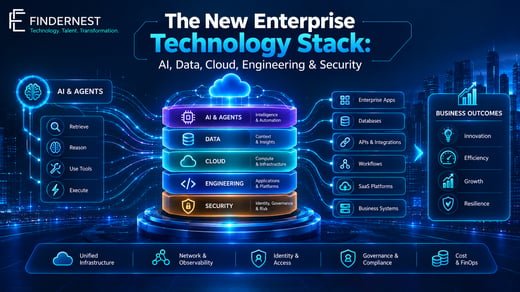 AI (Artificial Intelligence) • 14 September 2026, 9:00:01 am IST The New Enterprise Technology Stack: Integrating AI, Data, and Cloud 7 min read](https://www.findernest.com/en/blog/the-new-enterprise-technology-stack-integrating-ai-data-and-cloud)
##### [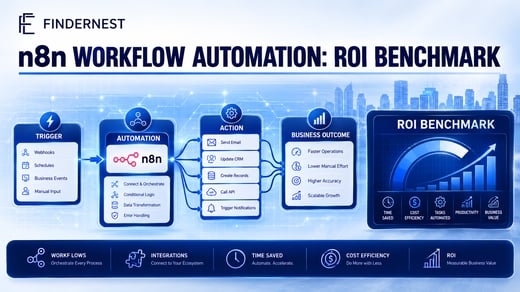 Intelligent Automation • 13 August 2026, 1:48:47 pm IST Measuring the True ROI of n8n Workflow Automation for Businesses 6 min read](https://www.findernest.com/en/blog/n8n-workflow-automation-the-real-roi-benchmark-how-businesses-can-measure-the-value-of-automation)
## Comments
###### Categories
- [Technology](https://www.findernest.com/en/blog/tag/technology)
- [Business Intelligence](https://www.findernest.com/en/blog/tag/business-intelligence)
- [Operations](https://www.findernest.com/en/blog/tag/operations)
- [Business Consulting](https://www.findernest.com/en/blog/tag/business-consulting)
- [Managed Services](https://www.findernest.com/en/blog/tag/managed-services)
- [Innovation](https://www.findernest.com/en/blog/tag/innovation)
- [Intelligent Automation](https://www.findernest.com/en/blog/tag/intelligent-automation)
- [Solution Architecture](https://www.findernest.com/en/blog/tag/solution-architecture)
- [AI (Artificial Intelligence)](https://www.findernest.com/en/blog/tag/ai-artificial-intelligence)
- [Software Development](https://www.findernest.com/en/blog/tag/software-development)
- [Implementation](https://www.findernest.com/en/blog/tag/implementation)
- [Engineering as a Service](https://www.findernest.com/en/blog/tag/engineering-as-a-service)
- [Governance](https://www.findernest.com/en/blog/tag/governance)
- [Digital Transformation](https://www.findernest.com/en/blog/tag/digital-transformation)
- [DevOps](https://www.findernest.com/en/blog/tag/devops)
- [Application Development](https://www.findernest.com/en/blog/tag/application-development)
- [Configuration](https://www.findernest.com/en/blog/tag/configuration)
- [Generative AI](https://www.findernest.com/en/blog/tag/generative-ai)
- [Outsourcing](https://www.findernest.com/en/blog/tag/outsourcing)
- [Framework](https://www.findernest.com/en/blog/tag/framework)
###### Recent Posts
- [Digital Transformation Roadmap: From Strategy to Execution](https://www.findernest.com/en/blog/digital-transformation-roadmap-from-strategy-to-execution)
- [The New Enterprise Technology Stack: Integrating AI, Data, and Cloud](https://www.findernest.com/en/blog/the-new-enterprise-technology-stack-integrating-ai-data-and-cloud)
- [Platform Engineering: The Backbone of AI-Native Software Development](https://www.findernest.com/en/blog/platform-engineering-the-backbone-of-ai-native-software-development)
- [AI-Ready Healthcare: A Practical Guide to Modernizing Operations](https://www.findernest.com/en/blog/ai-ready-healthcare-a-practical-guide-to-modernizing-operations)
- [AI-Native Technology Partners : What Enterprises Need To Know](https://www.findernest.com/en/blog/ai-native-technology-partners-what-enterprises-need-to-know)
- [Zoho One vs. Multiple Business Applications: Which Model Makes Sense?](https://www.findernest.com/en/blog/zoho-one-vs.-multiple-business-applications-which-model-makes-sense)
- [Microsoft Cloud Modernization: A Practical Guide for Enterprises](https://www.findernest.com/en/blog/microsoft-cloud-modernization-a-practical-guide-for-enterprises)
- [ERP and CRM Modernization: Key to Enterprise Digital Transformation](https://www.findernest.com/en/blog/erp-and-crm-modernization-key-to-enterprise-digital-transformation)
- [AI Automation vs. RPA: Key Differences for Enterprise Automation](https://www.findernest.com/en/blog/ai-automation-vs.-rpa-key-differences-for-enterprise-automation)
- [Platform Engineering vs. DevOps: Scaling Enterprise Software Delivery](https://www.findernest.com/en/blog/platform-engineering-vs.-devops-scaling-enterprise-software-delivery)
- [Why Digital Transformation Fails: The Strategy-to-Execution Gap](https://www.findernest.com/en/blog/why-digital-transformation-fails-the-strategy-to-execution-gap)
- [Cloud Cost Optimization: Achieving Sustainable 30% Savings](https://www.findernest.com/en/blog/cloud-cost-optimization-playbook-where-the-30-savings-actually-come-from)
- [RPO vs. In-House Hiring: Optimizing Tech Recruitment in India](https://www.findernest.com/en/blog/rpo-vs.-in-house-hiring-a-time-to-fill-benchmark-for-tech-roles-in-india)
- [Navigating Certification-Led Security: From ISO 27001 to SOC 2](https://www.findernest.com/en/blog/from-iso-270012022-to-soc-2-what-certification-led-security-actually-reduces)
- [24x7 NOC/SOC: What 99.95% Uptime Actually Costs — and Saves](https://www.findernest.com/en/blog/24x7-noc/soc-what-99.95-uptime-actually-costs-and-saves)
[](https://www.findernest.com)
## Enterprise Transformation Powered by Expertise, Excellence & Execution
Have a question? Feel free to reach out to info@findernest.com / +917207788004
-
-
-
-
-
-
- Solutions
- [Digital Transformation](https://www.findernest.com/digital-transformation-solutions)
- [AI & Intelligent Automation](https://www.findernest.com/ai)
- [Platform/Product Engineering](https://www.findernest.com/product-development-platform-engineering-services)
- [Business Consulting](https://www.findernest.com/business-consulting-services)
- [Cloud Transformation](https://www.findernest.com/cloud)
- [Data & Analytics](https://www.findernest.com/data)
- [Managed IT Services](https://www.findernest.com/managed-it-services-support)
- [Talent Solutions](https://www.findernest.com/talent-solutions)
- [Partnerships](https://www.findernest.com/platforms)
- [AWS](https://www.findernest.com/aws)
- [Oracle](https://www.findernest.com/oracle)
- [Microsoft](https://www.findernest.com/microsoft)
- [Zoho](https://www.findernest.com/zoho)
- [SAP](https://www.findernest.com/sap)
- [Databricks](https://www.findernest.com/databricks)
- [Hubspot](https://www.findernest.com/hubspot)
- [Salesforce](https://www.findernest.com/salesforce)
- [Service Now](https://www.findernest.com/servicenow)
- [About us](https://www.findernest.com/about)
- [Who we are](https://www.findernest.com/about)
- [How we Engage](https://www.findernest.com/how-we-work)
- [Careers](https://findernest.zohorecruit.in/jobs/Careers)
- [Blog & Insights](https://www.findernest.com/en/blog)
- [Sustainability](https://www.findernest.com/sustainability)
- [Community Guidelines](https://www.findernest.com/policy)
- [Privacy Policy](https://www.findernest.com/privacy)
- [Terms & Conditions](https://www.findernest.com/terms)
© 2026 FindErnest, Inc. All rights reserved. [Privacy Policy](https://www.findernest.com/privacy) | [Acceptable Use Policy](https://www.findernest.com/policy) | [Terms and Conditions](https://www.findernest.com/terms)
```json
{
"@context" : "https://schema.org",
"@type" : "BlogPosting",
"author" : {
"@type" : "Person",
"name" : "Praveen Gundala",
"url" : "https://www.findernest.com/en/blog/author/praveen-gundala"
},
"dateModified" : "2026-08-14T05:00:00.129Z",
"datePublished" : "2026-08-14T05:00:00.000Z",
"headline" : "AI-POWERED SOCIAL RESEARCH: COMPETITIVE INTELLIGENCE",
"image" : [ "https://www.findernest.com/hubfs/ChatGPT%20Image%20Aug%2014%2c%202026%2c%2008_32_27%20AM.png" ],
"mainEntityOfPage" : {
"@id" : "https://www.findernest.com/en/blog/ai-powered-social-research-turning-digital-signals-into-a-competitive-intelligence-engine",
"@type" : "WebPage"
},
"publisher" : {
"@type" : "Organization",
"logo" : {
"@type" : "ImageObject",
"url" : "https://www.findernest.com/hubfs/FINDERNEST%20LOGO.png"
},
"name" : "FindErnest"
}
}
```
```json
{
"@context" : "https://schema.org",
"@id" : "https://findernest.com/#organization",
"@type" : [ "Organization", "ProfessionalService" ],
"alternateName" : "FindErnest Software Services",
"areaServed" : [ {
"@type" : "Country",
"name" : "India"
}, {
"@type" : "Country",
"name" : "United States"
}, {
"@type" : "Country",
"name" : "United Kingdom"
}, {
"@type" : "Country",
"name" : "Canada"
}, {
"@type" : "Country",
"name" : "Australia"
}, {
"@type" : "Country",
"name" : "Singapore"
}, {
"@type" : "Country",
"name" : "United Arab Emirates"
}, {
"@type" : "Country",
"name" : "Saudi Arabia"
}, {
"@type" : "Country",
"name" : "Qatar"
}, {
"@type" : "Country",
"name" : "Kuwait"
}, {
"@type" : "Country",
"name" : "Bahrain"
}, {
"@type" : "Country",
"name" : "Oman"
}, {
"@type" : "Country",
"name" : "Germany"
}, {
"@type" : "Country",
"name" : "France"
}, {
"@type" : "Country",
"name" : "Netherlands"
}, {
"@type" : "Country",
"name" : "Belgium"
}, {
"@type" : "Country",
"name" : "Switzerland"
}, {
"@type" : "Country",
"name" : "Sweden"
}, {
"@type" : "Country",
"name" : "Denmark"
}, {
"@type" : "Country",
"name" : "Norway"
}, {
"@type" : "Country",
"name" : "Ireland"
} ],
"description" : "FindErnest is a Technology, Talent and Transformation Partner helping enterprises accelerate growth through Product Engineering, Platform Engineering, Managed Services, AI Solutions, Digital Transformation, Workforce Solutions, and Enterprise Platform Services.",
"email" : "info@findernest.com",
"foundingDate" : "2022",
"hasOfferCatalog" : {
"@type" : "OfferCatalog",
"itemListElement" : [ {
"@type" : "OfferCatalog",
"name" : "Cloud Platforms"
}, {
"@type" : "OfferCatalog",
"name" : "Enterprise Applications"
}, {
"@type" : "OfferCatalog",
"name" : "CRM & Customer Experience Platforms"
}, {
"@type" : "OfferCatalog",
"name" : "Identity & Security Platforms"
}, {
"@type" : "OfferCatalog",
"name" : "IT Operations & Managed Services Platforms"
}, {
"@type" : "OfferCatalog",
"name" : "Product Engineering"
}, {
"@type" : "OfferCatalog",
"name" : "Platform Engineering"
}, {
"@type" : "OfferCatalog",
"name" : "Talent Solutions"
}, {
"@type" : "OfferCatalog",
"name" : "Contingent Workforce Solutions"
}, {
"@type" : "OfferCatalog",
"name" : "Business Consulting & Outsourcing"
}, {
"@type" : "OfferCatalog",
"name" : "AI & Data Platforms"
} ],
"name" : "FindErnest Platform Solutions"
},
"image" : "https://findernest.com/assets/images/findernest-logo.png",
"knowsAbout" : [ "Artificial Intelligence", "Generative AI", "AI Development", "Product Engineering", "Platform Engineering", "Digital Transformation", "Managed Services", "Technology Consulting", "Cloud Migration", "Cloud Modernization", "Talent Solutions", "Workforce Transformation", "Identity and Access Management", "Automation", "Business Process Optimization", "Customer Experience Platforms", "Enterprise Applications", "AWS", "SAP", "Oracle", "Microsoft", "Google Cloud", "Zoho", "Databricks", "ServiceNow", "Workday", "OutSystems", "miniOrange", "HubSpot", "SuperOps", "Salesforce", "Spin.AI", "Pega" ],
"logo" : "https://findernest.com/assets/images/findernest-logo.png",
"name" : "FindErnest",
"sameAs" : [ "https://www.linkedin.com/company/findernest", "https://www.instagram.com/teamfindernest", "https://www.facebook.com/teamfindernest" ],
"telephone" : "+91-7207788004",
"url" : "https://findernest.com"
}
```