---
title: "SRE vs Traditional IT Operations: Transforming Business Reliability"
description: Discover how FindErnest Site Reliability Engineering (SRE) transforms IT operations, enhancing reliability & speed in today's fast-paced digital landscape
image: https://www.findernest.com/hubfs/ChatGPT%20Image%20May%2027%2c%202026%2c%2001_31_59%20AM.png
---
[Skip to main content](https://www.findernest.com/en/blog/sre-vs-traditional-it-operations-transforming-business-reliability#main-content)
[ ](https://www.findernest.com)
- [Show submenu for Solutions Solutions](https://www.findernest.com/services)
- [Show submenu for Digital Transformation Digital Transformation](https://www.findernest.com/digital-transformation-solutions)
- [AI & Intelligent Automation](https://www.findernest.com/ai)
- [Cloud Transformation](https://www.findernest.com/cloud)
- [Data & Analytics](https://www.findernest.com/data)
- [Enterprise Digital Transformation](https://www.findernest.com/software-engineering)
- [Customer Experience Transformation](https://www.findernest.com/ui-ux)
- [Cybersecurity & Identity Solutions](https://www.findernest.com/cybersecurity)
- [Show submenu for Product/Platform Engineering Product/Platform Engineering](https://www.findernest.com/product-development-platform-engineering-services)
- [Platform Engineering](https://www.findernest.com/software-engineering)
- [Product Development](https://www.findernest.com/software-engineering)
- [Cloud-Native Applications](https://www.findernest.com/cloud)
- [DevOps & DevSecOps](https://www.findernest.com/devops)
- [ERP & Enterprise Applications](https://www.findernest.com/product-development-platform-engineering-services)
- [Observability & Reliability](https://www.findernest.com/observability-reliability-services)
- [Show submenu for Managed IT Solutions Managed IT Solutions](https://www.findernest.com/managed-it-services-support)
- [IT Support](https://www.findernest.com/managed-it-services-support)
- [Cybersecurity](https://www.findernest.com/cybersecurity)
- [Cloud Infrastructure](https://www.findernest.com/cloud)
- [Disaster Recovery](https://www.findernest.com/devops)
- [Network & Server Management](https://www.findernest.com/managed-it-services-support)
- [Show submenu for Talent Solutions Talent Solutions](https://www.findernest.com/talent-solutions)
- [Contingent Workforce](https://www.findernest.com/talent-solutions)
- [Dedicated Team](https://www.findernest.com/talent-solutions)
- [Staffing Services](https://www.findernest.com/talent-solutions)
- [Recruitment Process Outsourcing](https://www.findernest.com/talent-solutions)
- [Show submenu for Platforms Platforms](https://www.findernest.com/platforms)
- [AWS](https://www.findernest.com/aws)
- [SAP](https://www.findernest.com/sap)
- [Oracle](https://www.findernest.com/oracle)
- [Microsoft](https://www.findernest.com/microsoft)
- Google Cloud
- [Zoho](https://www.findernest.com/zoho)
- [Databricks](https://www.findernest.com/databricks)
- [Servicenow](https://www.findernest.com/servicenow)
- [Outsystems](https://www.findernest.com/outsystems)
- [Hubspot](https://www.findernest.com/hubspot)
- [Salesforce](https://www.findernest.com/salesforce)
- [Show submenu for Industries Industries](https://www.findernest.com/industry)
- [Show submenu for Technology & Internet Technology & Internet](https://www.findernest.com/industry)
- [Ecommerce](https://www.findernest.com/industry)
- [HealthTech](https://www.findernest.com/industry)
- [FinTech](https://www.findernest.com/industry)
- [Edutech](https://www.findernest.com/industry)
- [High Tech](https://www.findernest.com/industry)
- [Show submenu for Healthcare & Life Sciences Healthcare & Life Sciences](https://www.findernest.com/industry)
- [Healthcare](https://www.findernest.com/industry)
- [Life Sciences](https://www.findernest.com/industry)
- [Pharmaceuticals](https://www.findernest.com/industry)
- [Medical Devices](https://www.findernest.com/industry)
- [Biotechnology](https://www.findernest.com/industry)
- [Show submenu for BFSI BFSI](https://www.findernest.com/industry)
- [Banking](https://www.findernest.com/industry)
- [Insurance](https://www.findernest.com/industry)
- [Financial Services](https://www.findernest.com/industry)
- [Show submenu for TME TME](https://www.findernest.com/industry)
- [Telecom](https://www.findernest.com/industry)
- [Gaming](https://www.findernest.com/industry)
- [Entertainment](https://www.findernest.com/industry)
- [OTT (Over-The-Top)](https://www.findernest.com/industry)
- [Media](https://www.findernest.com/industry)
- [Show submenu for Engineering & Construction Engineering & Construction](https://www.findernest.com/industry)
- [Engineering](https://www.findernest.com/industry)
- [Transportation](https://www.findernest.com/industry)
- [Infrastructure](https://www.findernest.com/industry)
- [Commercial/ Residential](https://www.findernest.com/industry)
- [Show submenu for Supply Chain Supply Chain](https://www.findernest.com/industry)
- [Manufacturing](https://www.findernest.com/industry)
- [FMCG](https://www.findernest.com/industry)
- [Automotive](https://www.findernest.com/industry)
- [Show submenu for Energy & Utilities Energy & Utilities](https://www.findernest.com/industry)
- [Oil & Gas](https://www.findernest.com/industry)
- [Environment](https://www.findernest.com/industry)
- [Energy](https://www.findernest.com/industry)
- [Utilities](https://www.findernest.com/industry)
- [Govt & Public Sector](https://www.findernest.com/industry)
- [Careers](https://findernest.zohorecruit.in/jobs/Careers)
- [Show submenu for About Us About Us](https://www.findernest.com/about)
- [Who we Are](https://www.findernest.com/about)
- [How We Work](https://www.findernest.com/how-we-work)
- [Blogs & Insights](https://www.findernest.com/en/blog)
- [Sustainability](https://www.findernest.com/sustainability)
- [Privacy Policy](https://www.findernest.com/privacy)
- [Community Guidelines](https://www.findernest.com/policy)
- [Terms & Conditions](https://www.findernest.com/terms)
Open main navigation
Close main navigation
- Show submenu for Solutions Solutions
- Solutions
- [Solutions](https://www.findernest.com/services)
- Show submenu for Digital Transformation Digital Transformation
- Digital Transformation
- [Digital Transformation](https://www.findernest.com/digital-transformation-solutions)
- [AI & Intelligent Automation](https://www.findernest.com/ai)
- [Cloud Transformation](https://www.findernest.com/cloud)
- [Data & Analytics](https://www.findernest.com/data)
- [Enterprise Digital Transformation](https://www.findernest.com/software-engineering)
- [Customer Experience Transformation](https://www.findernest.com/ui-ux)
- [Cybersecurity & Identity Solutions](https://www.findernest.com/cybersecurity)
- Show submenu for Product/Platform Engineering Product/Platform Engineering
- Product/Platform Engineering
- [Product/Platform Engineering](https://www.findernest.com/product-development-platform-engineering-services)
- [Platform Engineering](https://www.findernest.com/software-engineering)
- [Product Development](https://www.findernest.com/software-engineering)
- [Cloud-Native Applications](https://www.findernest.com/cloud)
- [DevOps & DevSecOps](https://www.findernest.com/devops)
- [ERP & Enterprise Applications](https://www.findernest.com/product-development-platform-engineering-services)
- [Observability & Reliability](https://www.findernest.com/observability-reliability-services)
- Show submenu for Managed IT Solutions Managed IT Solutions
- Managed IT Solutions
- [Managed IT Solutions](https://www.findernest.com/managed-it-services-support)
- [IT Support](https://www.findernest.com/managed-it-services-support)
- [Cybersecurity](https://www.findernest.com/cybersecurity)
- [Cloud Infrastructure](https://www.findernest.com/cloud)
- [Disaster Recovery](https://www.findernest.com/devops)
- [Network & Server Management](https://www.findernest.com/managed-it-services-support)
- Show submenu for Talent Solutions Talent Solutions
- Talent Solutions
- [Talent Solutions](https://www.findernest.com/talent-solutions)
- [Contingent Workforce](https://www.findernest.com/talent-solutions)
- [Dedicated Team](https://www.findernest.com/talent-solutions)
- [Staffing Services](https://www.findernest.com/talent-solutions)
- [Recruitment Process Outsourcing](https://www.findernest.com/talent-solutions)
- Show submenu for Platforms Platforms
- Platforms
- [Platforms](https://www.findernest.com/platforms)
- [AWS](https://www.findernest.com/aws)
- [SAP](https://www.findernest.com/sap)
- [Oracle](https://www.findernest.com/oracle)
- [Microsoft](https://www.findernest.com/microsoft)
- Google Cloud
- [Zoho](https://www.findernest.com/zoho)
- [Databricks](https://www.findernest.com/databricks)
- [Servicenow](https://www.findernest.com/servicenow)
- [Outsystems](https://www.findernest.com/outsystems)
- [Hubspot](https://www.findernest.com/hubspot)
- [Salesforce](https://www.findernest.com/salesforce)
- Show submenu for Industries Industries
- Industries
- [Industries](https://www.findernest.com/industry)
- Show submenu for Technology & Internet Technology & Internet
- Technology & Internet
- [Technology & Internet](https://www.findernest.com/industry)
- [Ecommerce](https://www.findernest.com/industry)
- [HealthTech](https://www.findernest.com/industry)
- [FinTech](https://www.findernest.com/industry)
- [Edutech](https://www.findernest.com/industry)
- [High Tech](https://www.findernest.com/industry)
- Show submenu for Healthcare & Life Sciences Healthcare & Life Sciences
- Healthcare & Life Sciences
- [Healthcare & Life Sciences](https://www.findernest.com/industry)
- [Healthcare](https://www.findernest.com/industry)
- [Life Sciences](https://www.findernest.com/industry)
- [Pharmaceuticals](https://www.findernest.com/industry)
- [Medical Devices](https://www.findernest.com/industry)
- [Biotechnology](https://www.findernest.com/industry)
- Show submenu for BFSI BFSI
- BFSI
- [BFSI](https://www.findernest.com/industry)
- [Banking](https://www.findernest.com/industry)
- [Insurance](https://www.findernest.com/industry)
- [Financial Services](https://www.findernest.com/industry)
- Show submenu for TME TME
- TME
- [TME](https://www.findernest.com/industry)
- [Telecom](https://www.findernest.com/industry)
- [Gaming](https://www.findernest.com/industry)
- [Entertainment](https://www.findernest.com/industry)
- [OTT (Over-The-Top)](https://www.findernest.com/industry)
- [Media](https://www.findernest.com/industry)
- Show submenu for Engineering & Construction Engineering & Construction
- Engineering & Construction
- [Engineering & Construction](https://www.findernest.com/industry)
- [Engineering](https://www.findernest.com/industry)
- [Transportation](https://www.findernest.com/industry)
- [Infrastructure](https://www.findernest.com/industry)
- [Commercial/ Residential](https://www.findernest.com/industry)
- Show submenu for Supply Chain Supply Chain
- Supply Chain
- [Supply Chain](https://www.findernest.com/industry)
- [Manufacturing](https://www.findernest.com/industry)
- [FMCG](https://www.findernest.com/industry)
- [Automotive](https://www.findernest.com/industry)
- Show submenu for Energy & Utilities Energy & Utilities
- Energy & Utilities
- [Energy & Utilities](https://www.findernest.com/industry)
- [Oil & Gas](https://www.findernest.com/industry)
- [Environment](https://www.findernest.com/industry)
- [Energy](https://www.findernest.com/industry)
- [Utilities](https://www.findernest.com/industry)
- [Govt & Public Sector](https://www.findernest.com/industry)
- [Careers](https://findernest.zohorecruit.in/jobs/Careers)
- Show submenu for About Us About Us
- About Us
- [About Us](https://www.findernest.com/about)
- [Who we Are](https://www.findernest.com/about)
- [How We Work](https://www.findernest.com/how-we-work)
- [Blogs & Insights](https://www.findernest.com/en/blog)
- [Sustainability](https://www.findernest.com/sustainability)
- [Privacy Policy](https://www.findernest.com/privacy)
- [Community Guidelines](https://www.findernest.com/policy)
- [Terms & Conditions](https://www.findernest.com/terms)
- Search
- [Contact](https://www.findernest.com/contact)
[Contact](https://www.findernest.com/contact)
Search
# SRE vs Traditional IT Operations: Transforming Business Reliability

by [Praveen Gundala](https://www.findernest.com/en/blog/author/praveen-gundala)
27 May 2026, 1:32:45 am IST
In today’s digital economy, downtime is costly, customer expectations are unforgiving, and software is released continuously. Traditional IT operations models that were once optimized for keeping infrastructure stable can’t keep up with this pace. This is where Site Reliability Engineering (SRE) fundamentally changes the game.
Born at Google, SRE blends software engineering with IT operations to build systems that are scalable, reliable, and highly automated. Instead of relying on manual intervention during incidents, SRE teams prioritize automation, observability, reliability metrics, and proactive system management.
For organizations growing SaaS products, cloud-native applications, eCommerce platforms, fintech solutions, or large enterprise systems, SRE is evolving into a strategic business capability—not just a technical function.
As companies expand their digital products, cloud environments, and customer-facing platforms, the constraints of traditional IT operations become more obvious. SRE addresses these gaps.
Traditional IT operations concentrate on maintaining infrastructure and resolving incidents when they occur. SRE takes a different approach: it applies software engineering principles to operations, with a strong focus on automation, reliability, scalability, and measurable performance.
---
## What Is Traditional IT Operations?
Traditional IT operations teams are responsible for:
- Managing servers, networks, and infrastructure
- Monitoring systems manually
- Handling tickets and escalations
- Performing deployments and maintenance
- Responding to outages reactively
- Ensuring system uptime
This model works for stable, predictable environments but struggles in fast-moving cloud-native ecosystems.
#### Typical Characteristics
- Manual processes
- Reactive incident management
- Siloed teams
- Limited automation
- Infrastructure-centric mindset
- Success measured by uptime only
The model is largely reactive.
When systems fail, operations teams troubleshoot and restore services. Stability is often prioritized over speed, which can slow innovation and software delivery cycles.
While this model worked well for legacy environments, modern cloud-native and distributed systems demand far greater agility.
---
## What Is SRE?
SRE applies engineering principles to IT operations.
Instead of depending heavily on manual operational work, SRE teams automate repetitive tasks, build self-healing systems, implement observability platforms, and continuously improve reliability through measurable engineering practices.
Core SRE principles include:
- Infrastructure automation
- Continuous monitoring
- Incident response engineering
- Reliability metrics (SLIs, SLOs, SLAs)
- Observability and distributed tracing
- Capacity planning
- Chaos engineering
- CI/CD reliability
- Performance optimization
Google introduced Site Reliability Engineering to bridge the gap between development and operations.
SRE combines:
- Software engineering
- Automation
- Observability
- Incident management
- Reliability metrics
- Scalability engineering
###### The goal is to create highly reliable systems while enabling faster innovation.
#### Core Principles of SRE
- Automate repetitive operational tasks
- Define measurable reliability goals
- Reduce operational toil
- Improve incident response
- Build resilient distributed systems
- Balance reliability with development velocity
---
## Key Differences Between SRE and Traditional IT Operations
| Area | Traditional IT Operations | SRE |
| --- | --- | --- |
| Approach | Reactive | Proactive |
| Focus | Infrastructure maintenance | Service reliability |
| Processes | Manual | Automated |
| Incident Handling | Human-driven | Automated + data-driven |
| Monitoring | Basic infrastructure monitoring | Full-stack observability |
| Deployments | Risk-averse and slow | Continuous delivery enabled |
| Scalability | Operational scaling | Engineering scaling |
| Metrics | Uptime | SLIs, SLOs, error budgets |
| Collaboration | Separate Dev & Ops | Shared ownership |
| Tooling | Ticketing-heavy | Automation-first |
---
### Reliability Metrics That Define SRE
SRE introduces measurable reliability frameworks.
#### SLI — Service Level Indicator
A metric that measures system performance.
Examples:
- Request latency
- Error rate
- Availability
- Throughput
#### SLO — Service Level Objective
A target reliability threshold.
Example:
- 99.9% uptime
- API response under 200ms
#### Error Budget
The acceptable amount of failure before engineering must prioritize reliability improvements.
This creates balance:
- Too many failures → focus on stability
- Stable systems → ship features faster
---
### Why Traditional IT Operations Struggle Today
Modern systems are:
- Distributed
- Cloud-native
- API-driven
- Microservices-based
- Always-on
- Globally scaled
Traditional operations models struggle because:
##### Manual Work Doesn't Scale
Teams spend excessive time on repetitive operational tasks.
##### Incident Response Is Slower
Reactive troubleshooting increases downtime.
##### Lack of Visibility
Basic monitoring cannot diagnose complex distributed systems.
##### Slow Deployments
Fear of outages reduces release frequency.
##### High Operational Costs
More infrastructure requires more operational staff.
---
### Benefits of SRE
##### 1. Faster Incident Resolution
Advanced observability and automation reduce Mean Time To Resolution (MTTR).
##### 2. Improved Reliability
SLO-driven engineering improves customer experience.
##### 3. Reduced Operational Toil
Automation handles repetitive tasks.
##### 4. Faster Releases
Reliability guardrails allow safer continuous deployment.
##### 5. Better Scalability
Systems scale without proportional growth in operations teams.
##### 6. Stronger Collaboration
SRE promotes DevOps-style shared accountability.
---
### Real-World SRE Practices
Modern SRE teams implement:
- Infrastructure as Code (IaC)
- Automated deployments
- Chaos engineering
- Distributed tracing
- Centralized logging
- Real-time alerting
- Auto-remediation workflows
- Capacity forecasting
- Reliability testing
Common platforms include:
- Datadog
- New Relic
- Grafana Labs
- Splunk
- PagerDuty
- Kubernetes
---
## Why Businesses Are Adopting SRE
Modern businesses operate in highly competitive digital markets where outages directly impact revenue, customer trust, and brand reputation.
SRE helps organizations:
#### 1. Reduce Downtime
High-performing engineering organizations significantly improve recovery times and reduce incident impact through automation and observability practices. DORA metrics widely used in DevOps and SRE track deployment frequency, MTTR, and change failure rates as indicators of engineering performance.
#### 2. Accelerate Software Delivery
SRE practices enable safer and faster deployments by improving CI/CD pipelines, testing automation, and rollback strategies.
Elite-performing DevOps organizations can deploy multiple times per day while maintaining low failure rates.
#### 3. Improve Customer Experience
Reliable applications lead to
- Better uptime
- Faster application response times
- Reduced latency
- Improved user satisfaction
Even a few seconds of delay in digital platforms can impact conversions and customer retention.
#### 4. Optimize Operational Costs
Automation reduces:
- Manual support effort
- Infrastructure waste
- Incident resolution overhead
- Downtime-related financial losses
Businesses can operate leaner while scaling faster.
---
### Key Metrics That Matter in SRE
Modern SRE teams rely heavily on measurable engineering performance indicators.
Some of the most important metrics include:
##### Deployment Frequency
How often software is successfully deployed to production.
##### MTTR (Mean Time to Restore)
How quickly teams recover from incidents.
##### Change Failure Rate
Percentage of deployments causing production failures.
##### Lead Time for Changes
Time required for code changes to reach production.
These metrics are commonly known as DORA metrics and are widely adopted as engineering performance standards.
---
## When Traditional IT Operations Still Make Sense
Traditional operations can still work well for:
- Small internal systems
- Static infrastructure
- Low-scale environments
- Organizations with infrequent releases
- Legacy on-premise systems
However, once systems become customer-facing and cloud-scale, SRE practices become critical.
---
### SRE + DevOps: How They Relate
SRE is often considered a practical implementation of DevOps principles.
| DevOps | SRE |
| --- | --- |
| Cultural philosophy | Engineering discipline |
| Focus on collaboration | Focus on reliability |
| CI/CD enablement | Reliability automation |
| Shared ownership | Reliability accountability |
In many organizations:
- DevOps improves delivery speed
- SRE ensures reliability at scale
Together, they create high-performing engineering organizations.
---
### Real Business Impact of SRE
Organizations adopting modern SRE practices often experience measurable operational improvements.
Typical business outcomes include the following:
| Business Metric | Traditional Operations | With Mature SRE Practices |
| --- | --- | --- |
| Incident Resolution Time | Hours | Minutes |
| Deployment Frequency | Weekly/Monthly | Multiple times daily |
| Infrastructure Downtime | High operational risk | Significantly reduced |
| Operational Costs | Higher manual overhead | Lower automation-driven costs |
| Release Confidence | Moderate | High |
| Scalability | Operational bottlenecks | Cloud-native scalability |
Industry research also shows elite-performing engineering teams deploy dramatically more frequently while recovering from incidents substantially faster than low-performing teams.
---
### Business Impact of SRE
Organizations that adopt SRE practices typically achieve:
- 40–70% less downtime
- Faster and safer deployment cycles
- Lower cloud and operational overhead
- Higher customer satisfaction and trust
- Increased engineering productivity
- Shorter incident detection and recovery times
For digital businesses, reliability has a direct impact on:
- Revenue and conversion
- User retention and churn
- Brand reputation
- Operational efficiency and cost control
### Challenges Businesses Face Without SRE
Yet many growing companies still grapple with the following:
- Frequent production incidents and outages
- Slow or inconsistent incident response
- Poor end-to-end observability
- Difficulty scaling infrastructure reliably
- Unstable or failed deployments
- Engineering bottlenecks and context switching
- Alert fatigue and noisy monitoring
- Inefficient or rising cloud costs
As architectures become more distributed, API-driven, and microservice-based, traditional operations models become increasingly hard to sustain and scale effectively.
---
## How FindErnest Helps Businesses Build Reliable Engineering Operations
FindErnest helps organizations modernize operations through scalable SRE and observability solutions designed for cloud-native businesses.
### FindErnest SRE & Reliability Engineering Capabilities
#### Observability & Monitoring
- Real-time infrastructure monitoring
- Application Performance Monitoring (APM)
- Distributed tracing
- Centralized log analytics
- Intelligent alerting systems
#### DevOps & Automation
- CI/CD pipeline optimization
- Infrastructure as Code (IaC)
- Kubernetes reliability engineering
- Automated incident workflows
- Cloud-native deployment strategies
#### Reliability Engineering
- SLO & SLA implementation
- Incident management frameworks
- Capacity planning
- Performance optimization
- Resilience engineering
### Cloud & Platform Engineering
- AWS, Azure, and multi-cloud operations
- Kubernetes platform reliability
- Scalable infrastructure design
- High-availability architecture
---
#### Example Business Projections with FindErnest SRE Solutions
Organizations implementing structured SRE practices with automation and observability can often achieve:
| Area | Estimated Improvement |
| --- | --- |
| Incident Detection Time | 40–70% faster |
| MTTR Reduction | 50–80% improvement |
| Deployment Frequency | 3–10x increase |
| Infrastructure Downtime | 60–90% reduction |
| Cloud Resource Optimization | 20–35% cost savings |
| Operational Efficiency | 30–50% improvement |
| Engineering Productivity | 25–45% increase |
These projections vary by system maturity, cloud architecture, and operational complexity, but they reflect common outcomes seen in organizations adopting SRE-driven operational models.
---
## The Future of IT Operations Is Reliability Engineering
The shift from traditional IT operations to SRE is not simply a technology upgrade—it is an operational transformation.
Businesses today need the following:
- Faster delivery
- Higher availability
- Better customer experiences
- Scalable infrastructure
- Operational efficiency
SRE enables organizations to achieve all of these simultaneously.
As digital platforms continue to grow in complexity, businesses that invest in automation, observability, and reliability engineering will be better positioned to scale confidently and compete effectively.
---
### Final Thoughts
Traditional IT operations were built for a slower, infrastructure-first world. Today’s digital businesses need reliability engineering that scales as fast as the business itself.
SRE reshapes operations by shifting from:
Manual → Automated
Reactive → Predictive
Infrastructure-focused → Service-focused
Operational support → Reliability engineering
For teams building modern SaaS platforms, digital products, or cloud-native systems, SRE is no longer optional—it’s a key source of competitive advantage.
While traditional IT operations kept earlier environments stable, modern organizations now need platforms that are inherently scalable, observable, automated, and resilient. SRE provides that bridge between rock-solid reliability and high engineering velocity.
By combining DevOps practices with observability tooling, automation, and reliability engineering, businesses can cut downtime, move faster, and build more resilient digital ecosystems.
With modern SRE and observability solutions from FindErnest, organizations can evolve from reactive maintenance to proactive reliability engineering that supports sustainable, long-term growth.
**Tags:**
[Intelligent Automation,](https://www.findernest.com/en/blog/tag/intelligent-automation) [DevOps,](https://www.findernest.com/en/blog/tag/devops) [Innovation,](https://www.findernest.com/en/blog/tag/innovation) [Managed Services,](https://www.findernest.com/en/blog/tag/managed-services) [Solution Architecture,](https://www.findernest.com/en/blog/tag/solution-architecture) [Implementation,](https://www.findernest.com/en/blog/tag/implementation) [Technology,](https://www.findernest.com/en/blog/tag/technology) [Business Intelligence,](https://www.findernest.com/en/blog/tag/business-intelligence) [Engineering as a Service,](https://www.findernest.com/en/blog/tag/engineering-as-a-service) [Configuration,](https://www.findernest.com/en/blog/tag/configuration) [Operations,](https://www.findernest.com/en/blog/tag/operations) [Business Consulting,](https://www.findernest.com/en/blog/tag/business-consulting) [Framework,](https://www.findernest.com/en/blog/tag/framework) [Outsourcing,](https://www.findernest.com/en/blog/tag/outsourcing) [Product Development,](https://www.findernest.com/en/blog/tag/product-development) [Software Development,](https://www.findernest.com/en/blog/tag/software-development) [Product Engineering,](https://www.findernest.com/en/blog/tag/product-engineering) [Application Development,](https://www.findernest.com/en/blog/tag/application-development) [Governance,](https://www.findernest.com/en/blog/tag/governance) [SaaS,](https://www.findernest.com/en/blog/tag/saas) [Digital Transformation,](https://www.findernest.com/en/blog/tag/digital-transformation) [Platform Engineering,](https://www.findernest.com/en/blog/tag/platform-engineering) [Observability,](https://www.findernest.com/en/blog/tag/observability) [Site Reliability Engineering (SRE)](https://www.findernest.com/en/blog/tag/site-reliability-engineering-sre)

Post by [Praveen Gundala](https://www.findernest.com/en/blog/author/praveen-gundala)
Praveen Gundala, Founder and Chief Executive Officer of FindErnest, provides value-added information technology and innovative digital solutions that enhance client business performance, accelerate time-to-market, increase productivity, and improve customer service. FindErnest offers end-to-end solutions tailored to clients' specific needs. Our persuasive tone emphasizes our dedication to producing outstanding outcomes and our capacity to use talent and technology to propel business success. I have a strong interest in using cutting-edge technology and creative solutions to fulfill the constantly changing needs of businesses. In order to keep up with the latest developments, I am always looking for ways to improve my knowledge and abilities. Fast-paced work environments are my favorite because they allow me to use my drive and entrepreneurial spirit to produce amazing results. My outstanding leadership and communication abilities enable me to inspire and encourage my team and create a successful culture.
[Follow me on my website](https://www.findernest.com) [Follow me on Facebook](https://www.facebook.com/teamfindernest) [Follow me on LinkedIn](https://www.linkedin.com/company/findernest) [Follow me on Twitter](https://x.com/findernestteam)
### Related Articles
##### [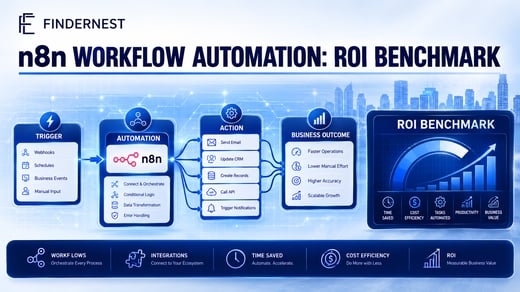 Intelligent Automation • 13 August 2026, 1:48:47 pm IST Measuring the True ROI of n8n Workflow Automation for Businesses 6 min read](https://www.findernest.com/en/blog/n8n-workflow-automation-the-real-roi-benchmark-how-businesses-can-measure-the-value-of-automation)
##### [ Intelligent Automation • 12 August 2026, 7:05:59 pm IST The ROI of Digital Transformation: What 75+ Projects Taught Us 6 min read](https://www.findernest.com/en/blog/the-roi-of-digital-transformation-what-75-projects-taught-us)
##### [ Intelligent Automation • 3 July 2026, 2:56:26 am IST FindErnest Vision 2030: Leading AI-First Transformation and Innovation 4 min read](https://www.findernest.com/en/blog/findernest-vision-2030-leading-ai-first-transformation-and-innovation)
## Comments
###### Categories
- [Technology](https://www.findernest.com/en/blog/tag/technology)
- [Business Intelligence](https://www.findernest.com/en/blog/tag/business-intelligence)
- [Operations](https://www.findernest.com/en/blog/tag/operations)
- [Business Consulting](https://www.findernest.com/en/blog/tag/business-consulting)
- [Managed Services](https://www.findernest.com/en/blog/tag/managed-services)
- [Innovation](https://www.findernest.com/en/blog/tag/innovation)
- [Intelligent Automation](https://www.findernest.com/en/blog/tag/intelligent-automation)
- [Solution Architecture](https://www.findernest.com/en/blog/tag/solution-architecture)
- [Software Development](https://www.findernest.com/en/blog/tag/software-development)
- [AI (Artificial Intelligence)](https://www.findernest.com/en/blog/tag/ai-artificial-intelligence)
- [Implementation](https://www.findernest.com/en/blog/tag/implementation)
- [Engineering as a Service](https://www.findernest.com/en/blog/tag/engineering-as-a-service)
- [Governance](https://www.findernest.com/en/blog/tag/governance)
- [DevOps](https://www.findernest.com/en/blog/tag/devops)
- [Application Development](https://www.findernest.com/en/blog/tag/application-development)
- [Configuration](https://www.findernest.com/en/blog/tag/configuration)
- [Digital Transformation](https://www.findernest.com/en/blog/tag/digital-transformation)
- [Generative AI](https://www.findernest.com/en/blog/tag/generative-ai)
- [Outsourcing](https://www.findernest.com/en/blog/tag/outsourcing)
- [Framework](https://www.findernest.com/en/blog/tag/framework)
###### Recent Posts
- [Platform Engineering vs. DevOps: Scaling Enterprise Software Delivery](https://www.findernest.com/en/blog/platform-engineering-vs.-devops-scaling-enterprise-software-delivery)
- [Why Digital Transformation Fails: The Strategy-to-Execution Gap](https://www.findernest.com/en/blog/why-digital-transformation-fails-the-strategy-to-execution-gap)
- [Cloud Cost Optimization: Achieving Sustainable 30% Savings](https://www.findernest.com/en/blog/cloud-cost-optimization-playbook-where-the-30-savings-actually-come-from)
- [RPO vs. In-House Hiring: Optimizing Tech Recruitment in India](https://www.findernest.com/en/blog/rpo-vs.-in-house-hiring-a-time-to-fill-benchmark-for-tech-roles-in-india)
- [Navigating Certification-Led Security: From ISO 27001 to SOC 2](https://www.findernest.com/en/blog/from-iso-270012022-to-soc-2-what-certification-led-security-actually-reduces)
- [24x7 NOC/SOC: What 99.95% Uptime Actually Costs — and Saves](https://www.findernest.com/en/blog/24x7-noc/soc-what-99.95-uptime-actually-costs-and-saves)
- [GCC Build-Operate-Transfer: Unlocking India's $98B Market Potential](https://www.findernest.com/en/blog/gcc-build-operate-transfer-in-india-what-the-98b-market-means-for-your-entry-strategy)
- [Inside a Faster Pega Transformation: A Banking Case Study](https://www.findernest.com/en/blog/inside-a-faster-pega-transformation-a-banking-case-study)
- [Dedicated Team VS. Staff Augmentation: Cost & Velocity](https://www.findernest.com/en/blog/dedicated-team-vs.-staff-augmentation-a-cost-velocity-benchmark-for-scaleups-1)
- [AI-POWERED SOCIAL RESEARCH: COMPETITIVE INTELLIGENCE](https://www.findernest.com/en/blog/ai-powered-social-research-turning-digital-signals-into-a-competitive-intelligence-engine)
- [Measuring the True ROI of n8n Workflow Automation for Businesses](https://www.findernest.com/en/blog/n8n-workflow-automation-the-real-roi-benchmark-how-businesses-can-measure-the-value-of-automation)
- [The ROI of Digital Transformation: What 75+ Projects Taught Us](https://www.findernest.com/en/blog/the-roi-of-digital-transformation-what-75-projects-taught-us)
- [FindErnest Vision 2030: Leading AI-First Transformation and Innovation](https://www.findernest.com/en/blog/findernest-vision-2030-leading-ai-first-transformation-and-innovation)
- [Microsoft Security Services: XDR, Sentinel & Zero Trust by FindErnest](https://www.findernest.com/en/blog/microsoft-security-services-xdr-sentinel-zero-trust-by-findernest)
- [Zoho Implementation, Deluge & Managed Services | FindErnest](https://www.findernest.com/en/blog/zoho-implementation-deluge-managed-services-findernest)
[](https://www.findernest.com)
## Enterprise Transformation Powered by Expertise, Excellence & Execution
Have a question? Feel free to reach out to info@findernest.com / +917207788004
-
-
-
-
-
-
- Solutions
- [Digital Transformation](https://www.findernest.com/digital-transformation-solutions)
- [AI & Intelligent Automation](https://www.findernest.com/ai)
- [Platform/Product Engineering](https://www.findernest.com/product-development-platform-engineering-services)
- [Business Consulting](https://www.findernest.com/business-consulting-services)
- [Cloud Transformation](https://www.findernest.com/cloud)
- [Data & Analytics](https://www.findernest.com/data)
- [Managed IT Services](https://www.findernest.com/managed-it-services-support)
- [Talent Solutions](https://www.findernest.com/talent-solutions)
- [Partnerships](https://www.findernest.com/platforms)
- [AWS](https://www.findernest.com/aws)
- [Oracle](https://www.findernest.com/oracle)
- [Microsoft](https://www.findernest.com/microsoft)
- [Zoho](https://www.findernest.com/zoho)
- [SAP](https://www.findernest.com/sap)
- [Databricks](https://www.findernest.com/databricks)
- [Hubspot](https://www.findernest.com/hubspot)
- [Salesforce](https://www.findernest.com/salesforce)
- [Service Now](https://www.findernest.com/servicenow)
- [About us](https://www.findernest.com/about)
- [Who we are](https://www.findernest.com/about)
- [How we Engage](https://www.findernest.com/how-we-work)
- [Careers](https://findernest.zohorecruit.in/jobs/Careers)
- [Blog & Insights](https://www.findernest.com/en/blog)
- [Sustainability](https://www.findernest.com/sustainability)
- [Community Guidelines](https://www.findernest.com/policy)
- [Privacy Policy](https://www.findernest.com/privacy)
- [Terms & Conditions](https://www.findernest.com/terms)
© 2026 FindErnest, Inc. All rights reserved. [Privacy Policy](https://www.findernest.com/privacy) | [Acceptable Use Policy](https://www.findernest.com/policy) | [Terms and Conditions](https://www.findernest.com/terms)
```json
{
"@context" : "https://schema.org",
"@type" : "BlogPosting",
"author" : {
"@type" : "Person",
"name" : "Praveen Gundala",
"url" : "https://www.findernest.com/en/blog/author/praveen-gundala"
},
"dateModified" : "2026-05-26T20:37:07.583Z",
"datePublished" : "2026-05-26T20:02:45.000Z",
"headline" : "SRE vs Traditional IT Operations: Transforming Business Reliability",
"image" : [ "https://www.findernest.com/hubfs/ChatGPT%20Image%20May%2027%2c%202026%2c%2001_31_59%20AM.png" ],
"mainEntityOfPage" : {
"@id" : "https://www.findernest.com/en/blog/sre-vs-traditional-it-operations-transforming-business-reliability",
"@type" : "WebPage"
},
"publisher" : {
"@type" : "Organization",
"logo" : {
"@type" : "ImageObject",
"url" : "https://www.findernest.com/hubfs/FINDERNEST%20LOGO.png"
},
"name" : "FindErnest"
}
}
```
```json
{
"@context" : "https://schema.org",
"@id" : "https://findernest.com/#organization",
"@type" : [ "Organization", "ProfessionalService" ],
"alternateName" : "FindErnest Software Services",
"areaServed" : [ {
"@type" : "Country",
"name" : "India"
}, {
"@type" : "Country",
"name" : "United States"
}, {
"@type" : "Country",
"name" : "United Kingdom"
}, {
"@type" : "Country",
"name" : "Canada"
}, {
"@type" : "Country",
"name" : "Australia"
}, {
"@type" : "Country",
"name" : "Singapore"
}, {
"@type" : "Country",
"name" : "United Arab Emirates"
}, {
"@type" : "Country",
"name" : "Saudi Arabia"
}, {
"@type" : "Country",
"name" : "Qatar"
}, {
"@type" : "Country",
"name" : "Kuwait"
}, {
"@type" : "Country",
"name" : "Bahrain"
}, {
"@type" : "Country",
"name" : "Oman"
}, {
"@type" : "Country",
"name" : "Germany"
}, {
"@type" : "Country",
"name" : "France"
}, {
"@type" : "Country",
"name" : "Netherlands"
}, {
"@type" : "Country",
"name" : "Belgium"
}, {
"@type" : "Country",
"name" : "Switzerland"
}, {
"@type" : "Country",
"name" : "Sweden"
}, {
"@type" : "Country",
"name" : "Denmark"
}, {
"@type" : "Country",
"name" : "Norway"
}, {
"@type" : "Country",
"name" : "Ireland"
} ],
"description" : "FindErnest is a Technology, Talent and Transformation Partner helping enterprises accelerate growth through Product Engineering, Platform Engineering, Managed Services, AI Solutions, Digital Transformation, Workforce Solutions, and Enterprise Platform Services.",
"email" : "info@findernest.com",
"foundingDate" : "2022",
"hasOfferCatalog" : {
"@type" : "OfferCatalog",
"itemListElement" : [ {
"@type" : "OfferCatalog",
"name" : "Cloud Platforms"
}, {
"@type" : "OfferCatalog",
"name" : "Enterprise Applications"
}, {
"@type" : "OfferCatalog",
"name" : "CRM & Customer Experience Platforms"
}, {
"@type" : "OfferCatalog",
"name" : "Identity & Security Platforms"
}, {
"@type" : "OfferCatalog",
"name" : "IT Operations & Managed Services Platforms"
}, {
"@type" : "OfferCatalog",
"name" : "Product Engineering"
}, {
"@type" : "OfferCatalog",
"name" : "Platform Engineering"
}, {
"@type" : "OfferCatalog",
"name" : "Talent Solutions"
}, {
"@type" : "OfferCatalog",
"name" : "Contingent Workforce Solutions"
}, {
"@type" : "OfferCatalog",
"name" : "Business Consulting & Outsourcing"
}, {
"@type" : "OfferCatalog",
"name" : "AI & Data Platforms"
} ],
"name" : "FindErnest Platform Solutions"
},
"image" : "https://findernest.com/assets/images/findernest-logo.png",
"knowsAbout" : [ "Artificial Intelligence", "Generative AI", "AI Development", "Product Engineering", "Platform Engineering", "Digital Transformation", "Managed Services", "Technology Consulting", "Cloud Migration", "Cloud Modernization", "Talent Solutions", "Workforce Transformation", "Identity and Access Management", "Automation", "Business Process Optimization", "Customer Experience Platforms", "Enterprise Applications", "AWS", "SAP", "Oracle", "Microsoft", "Google Cloud", "Zoho", "Databricks", "ServiceNow", "Workday", "OutSystems", "miniOrange", "HubSpot", "SuperOps", "Salesforce", "Spin.AI", "Pega" ],
"logo" : "https://findernest.com/assets/images/findernest-logo.png",
"name" : "FindErnest",
"sameAs" : [ "https://www.linkedin.com/company/findernest", "https://www.instagram.com/teamfindernest", "https://www.facebook.com/teamfindernest" ],
"telephone" : "+91-7207788004",
"url" : "https://findernest.com"
}
```